Bike Lanes vs. Community Safety: Citizens and Emergency Vehicles Pay the Price
- Thursday, December 26th, 2024 - 11:37 am
- 2550
- 0 comment
The City of Guelph has seen a significant expansion of dedicated bike lanes as part of its commitment to fostering a sustainable and environmentally friendly transportation network. While this initiative promotes active commuting and reduces carbon emissions, it has also raised significant concerns about its impact on the majority of road users—car drivers—and the broader community. These bike lanes, seldom used by cyclists, disproportionately burden drivers and exacerbate existing challenges, particularly on major arterial roads.
Barriered Bike Lanes: A Double-Edged Sword
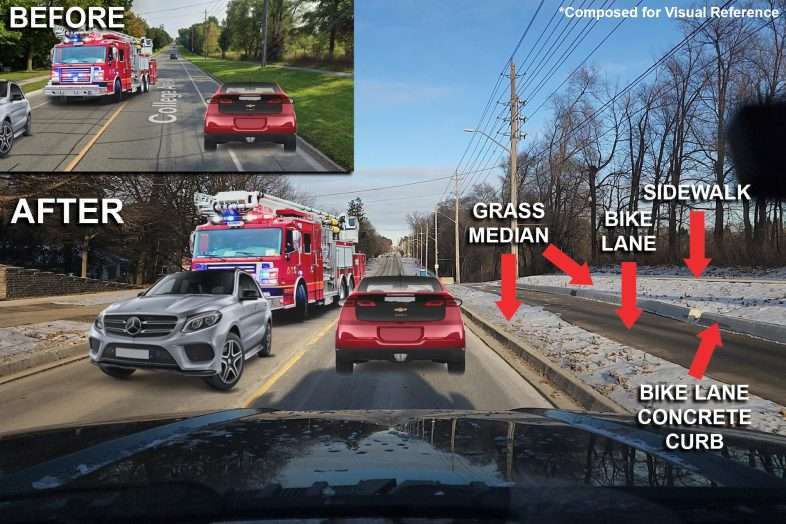
Unlike shared or painted bike lanes, some of Guelph’s bike lanes are physically separated from vehicle traffic by barriers. These barriers ensure the safety of cyclists but prevent vehicles, including emergency responders, from using the lanes under any circumstances. However, not all bike lanes in Guelph are barriered yet, though the trend towards protected lanes is increasing, with significant investments being made. This design decision contrasts with cities where non-barriered bike lanes can temporarily serve as a clearance route for emergency vehicles.
Traffic Flow Challenges
The introduction of barriered bike lanes has reduced the number of vehicle lanes on major roads. During peak hours, this has led to increased congestion, as fewer lanes are available for cars. This affects the majority of road users, who are drivers, and adds unnecessary frustration and delays. Despite these sacrifices, bike lanes are rarely used compared to vehicle lanes, making the trade-off for most commuters unjustifiable. Drivers—who pay the bulk of taxes funding road projects—are left questioning why so much of their infrastructure is being repurposed for such limited use.
Adding to these frustrations are new traffic regulations at intersections with protected bike lanes. The implementation of “no right turn on red” rules has caused significant backups at many intersections, as vehicles are forced to wait through additional light cycles. This change, introduced to accommodate cyclists, has resulted in tremendous traffic congestion on roads that were previously efficient. Residents have shared numerous examples of these backups on social media, illustrating the day-to-day impact on drivers.
Emergency Services and Response Times
The design of protected bike lanes with physical barriers, such as curbs, presents a significant challenge to emergency services. Unlike painted or shared bike lanes that can provide temporary clearance paths for ambulances, fire trucks, or police vehicles, these protected lanes are entirely inaccessible to any vehicle. This design flaw directly contradicts claims that bike lanes could facilitate emergency response by offering alternative routes. In fact, the barriers increase the likelihood of delays as emergency vehicles must navigate congested vehicle lanes without the possibility of bypassing traffic through bike lanes.
Emergency responders depend on quick and unobstructed access to fulfill their duties. In areas with high traffic and restricted lane availability, delays can become a serious issue. While data specific to Guelph is limited, general concerns have been echoed by emergency service professionals in other cities with similar infrastructure. For example, Toronto Paramedic Services and Fire Services have expressed apprehensions about how bike lane designs might impede their response times. In Guelph, where barriered bike lanes further restrict maneuverability, these concerns are particularly relevant and highlight the risks imposed by prioritizing underused bike lanes.
Thanks to the Yonge St bike lanes, this ambulance wasted 30 valuable seconds at a single intersection. There was no where for the cars to pull off to. There are dozens of intersections coming up. If it’s your family member waiting for a defibrillator, I can’t imagine…. #topoli pic.twitter.com/tIxxkvB3xJ
— Mark McQueen (@markrmcqueen) December 18, 2023
Influence of Guelph Coalition for Active Transportation (GCAT)
The Guelph Coalition for Active Transportation (GCAT) has been an active and vocal proponent of expanding bike lanes in the city. Their advocacy has significantly influences local policy and infrastructure. While GCAT’s efforts align with promoting sustainable transportation, their strong involvement raises questions about transparency and accountability. Should GCAT be registered in Guelph’s Lobbyist Registry? As their influence continues to shape substantial public expenditures and road-use policies, it is essential for residents to have clarity on the extent of GCAT’s lobbying activities and their role in decision-making processes.
Considering the Global Carbon Emissions Context
It’s important to consider the broader context of Guelph’s contribution to global carbon emissions. Guelph’s total emissions accounts for only 0.0023% of global carbon emissions. While reducing emissions is a necessary step towards combating climate change, the restrictions, hazards, and burdens introduced by barriered bike lanes—which disrupt traffic flow, delay emergency responses, and inconvenience the vast majority of road users—raise questions about the proportionality of these measures. Are these significant impacts justified when Guelph’s contribution to global emissions is so minimal?

Seasonal Challenges for Bike Lanes
Another critical issue with bike lanes in Guelph is their limited practicality during the winter months. For much of the year, snow and ice render many bike lanes inaccessible, as they are often not plowed or maintained to the same standard as vehicle lanes. This seasonal inaccessibility undermines their usability and effectiveness, leaving commuters and emergency services to deal with the reduced road capacity while the bike lanes sit unused. Given Guelph’s long winters, this represents a significant oversight in the planning and implementation of cycling infrastructure.
The Financial Burden of Protected Bike Lanes
Adding to these challenges is the financial impact. Guelph is currently undergoing a $38 million project to rebuild three arterial roads to accommodate protected bike lanes. This investment comes at a time when residents are already facing very high tax increases. Most drivers, who make up the majority of road users, see little benefit from these projects, especially when the infrastructure remains largely underused. The financial strain on taxpayers is compounded by the seasonal impracticality of these bike lanes, further questioning the justification for such a significant expenditure.
Ontario Government’s Proposed Changes
The concerns surrounding bike lanes are not unique to Guelph. Ontario Premier Doug Ford has proposed a plan to limit the construction of bike lanes on main arterial roads, citing safety concerns and the impact on traffic congestion and emergency vehicle access. This proposal highlights the broader debate about the balance between promoting sustainable transportation and maintaining efficient road networks. Ford’s plan emphasizes the need to prioritize practical, high-traffic areas and ensure that infrastructure decisions serve the majority of road users.
Barriered bike lanes impact on traffic flow, emergency response capabilities, and the financial burden on residents highlights the need for a critical reassessment. By prioritizing the needs of the majority of road users and embracing more practical solutions, Guelph can create an infrastructure that works for everyone.


Add Comment
You must be logged in to post a comment.