
Media Outlets Receiving Funding by Political Parties Should Not Be Trusted During Elections

- Saturday, April 5th, 2025 - 12:54 pm
- 1065
- 0 comment
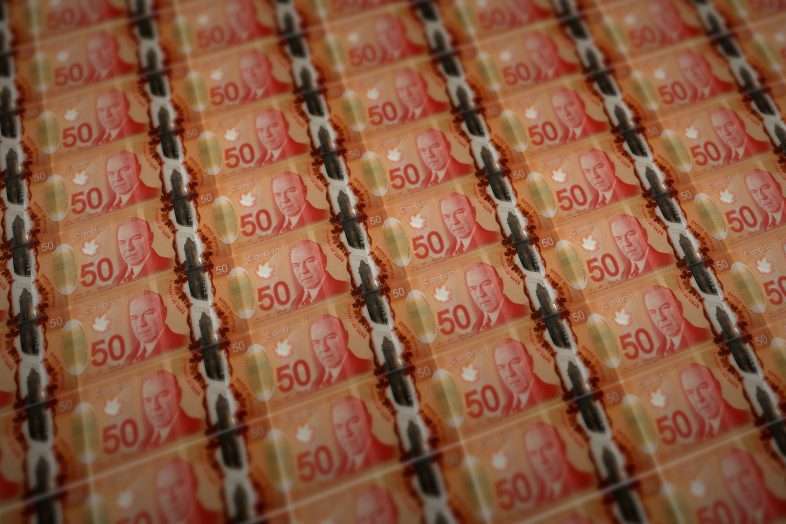
In a democratic society, the role of the media is to inform, scrutinize, and hold power to account. Especially during elections, when the public’s right to accurate, unbiased information is most crucial, the independence of news sources becomes non-negotiable. Yet increasingly, we’re seeing media outlets receive funding – directly or indirectly – from the federal government. This raises urgent and uncomfortable questions about credibility, transparency, and the erosion of public trust.
When a news organization accepts funding from the federal government, it’s important to recognize where that funding actually comes from. The federal government is not a neutral body – it is always led by a political party, such as the Liberals, Conservatives, or another group in power at the time. That means federal media funding is, in practice, money allocated by a political party with its own interests and agenda.
Even if the funding is delivered through arm’s-length agencies or programs claiming non-partisan goals, it originates from a government run by a specific party. Media outlets receiving this support are, by extension, receiving funding from a political entity. This creates a serious conflict of interest – particularly during elections, when media bias (or even the appearance of bias) can sway public opinion and influence democratic outcomes.
No matter how well-intentioned a newsroom may be, financial ties to political organizations create an environment where editorial independence is compromised. Reporters may feel subtle pressure to frame stories more favourably. Editors may prioritize narratives that benefit funders. Entire topics may be ignored if they pose political risk to the party in power.
This isn’t just speculation – it’s basic human psychology mixed with economic survival. Newsrooms are businesses. When their survival depends on maintaining relationships with the very government they’re supposed to report on objectively, journalistic integrity suffers.
At election time, the stakes are particularly high. Citizens rely on the media to cut through noise and propaganda, to present facts, challenge candidates, and explore policies with equal intensity. When media outlets are financially tethered to the party in power, they are no longer observers – they become participants in the political machinery.
This undermines the very foundation of democratic decision-making. The public cannot make informed choices if their sources of information are skewed, censored, or manipulated to serve a political agenda. And once trust in the media is broken, it’s incredibly difficult to restore.
Some media outlets attempt to mitigate these concerns by disclosing their funding sources. But disclosure is not a substitute for independence. Just because a reader is aware of a conflict doesn’t mean the conflict no longer matters. Transparency can be a first step – but it cannot be the last. The mere act of accepting money from political entities casts a long shadow over everything that outlet produces.
In an age of increasing polarization and misinformation, independent journalism is more important than ever. Citizens should critically evaluate their news sources – especially during election cycles. If a media outlet receives funding, support, or advertising dollars from the federal government, and that government is run by a political party, that relationship should be a red flag.
There’s a growing concern about bias in the media landscape in the city of Guelph today – especially when federal funding enters the picture. While some local outlets benefit from government subsidies, their editorial independence becomes questionable.
That’s why CaughtinGuelph.com remains proudly independent. We do not accept any government funding, subsidies, or political support of any kind.




 Login with Google
Add Comment
You must be logged in to post a comment.